

If this is your dog’s first boarding stay, there is a good chance you are more nervous about it than your dog is.
And I get it.
You have found the place. Asked the questions. Checked the photos. Read the reviews. Maybe even visited once.
Then boarding day gets closer and your brain starts doing this:
Will they eat?
Will they sleep?
What if they think I left them?
Should I send their bed? Their favourite toy? Their entire wardrobe?
What if they just sit near the gate waiting for me?
If you are thinking like this, welcome to being a PawPaw.
Preparing your dog for boarding is not really about creating the perfect suitcase.
It is about making the change feel as normal and predictable as possible.
And making sure the people looking after your floofy actually know your dog, not just their name.
At a glance
- Start preparing before boarding day.
- Keep the days before the stay fairly normal.
- Tell the carers the weird little things about your dog.
- Consider a trial stay if your dog needs one.
- Pack what helps — not half your house.
- Keep the goodbye calm.
- Every dog settles differently.
- Prepare yourself too.
01 — Start before boarding day
If possible, boarding day should not be the first time your dog experiences everything at once.
New place.
New humans.
New smells.
Different dogs.
Different sleeping space.
And suddenly PawPaw disappears through the gate.
That is quite a lot for one floofy brain to process.
So when pet parents ask me how to prepare a dog for boarding, my first thought is usually:
Can we make at least some of this familiar before the actual stay?
Maybe your dog visits the place beforehand.
Maybe they meet the people who will care for them.
Maybe they spend a few hours there before an overnight stay.
Not every dog needs the same preparation.
A Labrador who walks into every room like they own the property may need very little.
Another dog may stand at the entrance thinking:
Excuse me. Nobody discussed this with me.
Know which one you have.
And prepare accordingly.
02 — Keep things boringly normal
This one sounds strange.
Your dog is going boarding tomorrow, so naturally you want to make today special.
Extra-long walk.
Big outing.
Special dinner.
Five treats because you feel guilty.
One emotional speech explaining that PawPaw will definitely return.
I understand the temptation.
But before a boarding stay, normal can actually be wonderful.
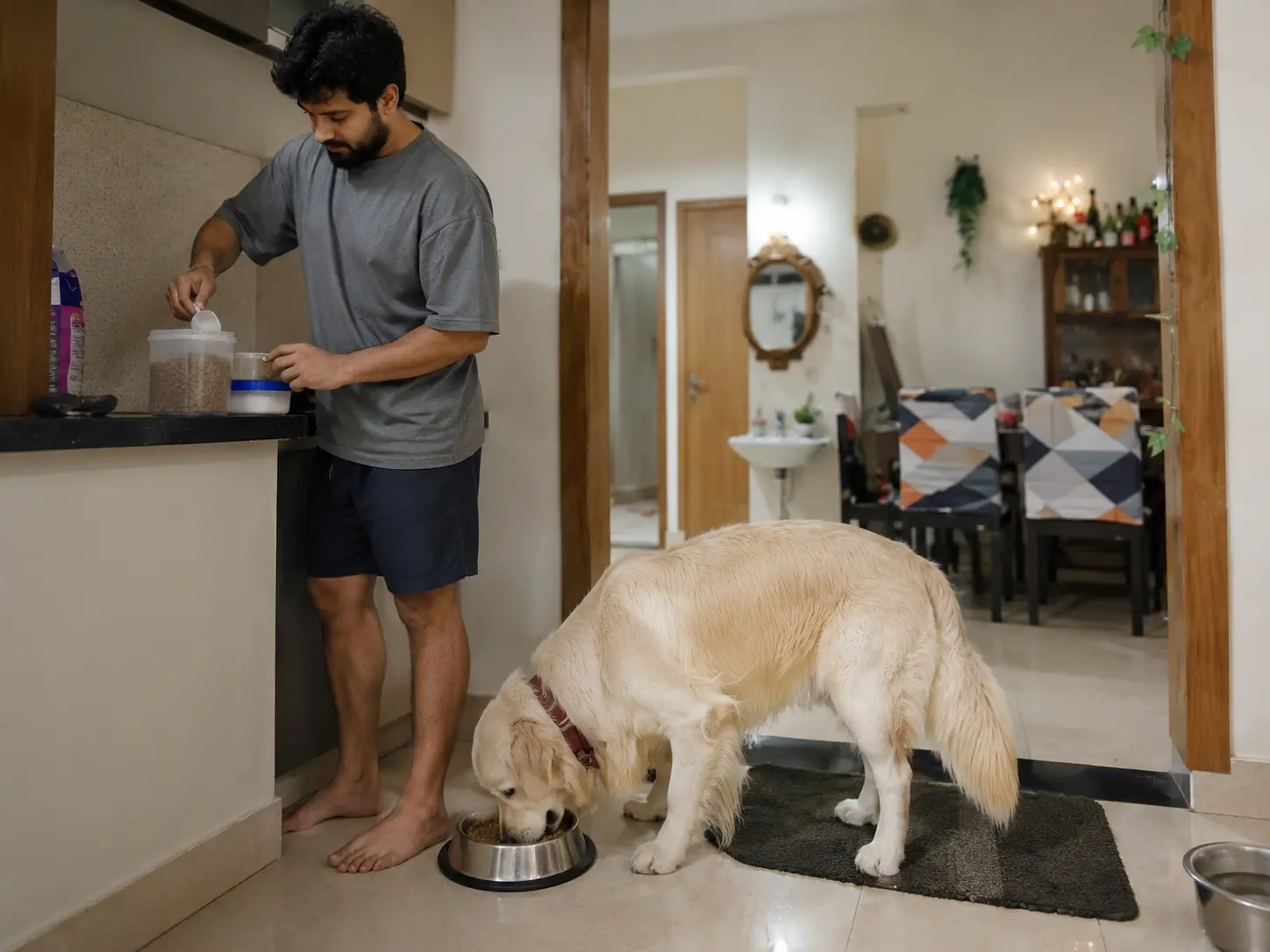
Keep their usual food.
Keep their normal walk.
Let them sleep at their usual time.
Try not to turn the day before boarding into a farewell festival.
Dogs notice changes in us too.
If you suddenly start hugging them every four minutes while whispering:
“My poor baby… what will you do without me?”
your dog may quite reasonably conclude:
Something terrible is happening tomorrow.
So behave normally.
You are not abandoning your dog.
You are dropping them somewhere you have chosen to care for them.
There is a big difference.
03 — Tell us the weird stuff
This might be the most useful thing you can do before dog boarding.
Tell the caregivers the things that would never appear on your dog’s vaccination record.
Things like:
“He won’t eat unless someone stands nearby.”
“She hates pressure cookers.”
“He will steal another dog’s food and then look innocent.”
“She gets scared when someone picks up a broom.”
“He wakes up at 5:30am and believes everybody else should too.”
“She knows the word ‘come’. She simply considers it optional.”
You know exactly what I mean.
Every dog has their little operating manual.
And sometimes PawPaws hesitate to share these things because they worry their dog will sound difficult.
Please don’t.
Useful information is never embarrassing.
Tell the boarding team about:
- feeding quirks
- sleep habits
- fears
- resource guarding
- separation behaviour
- toilet routine
- medication
- triggers
- favourite activities
- things your dog absolutely does not enjoy
And be honest.
If your dog has snapped before, say so.
If they guard food, say so.
If they panic when left alone, say so.
A boarding team can work with information.
They cannot work with surprises.
04 — Does your dog need a trial stay?
Ask yourself this:
If my dog could vote, would they be comfortable going straight into a three-night stay?
Some dogs probably would.
Three nights? New friends? Excellent. Where is dinner?
Others might appreciate a smaller introduction.
That is where a trial stay can help.
It might be:
- a short daycare visit
- a few hours
- a half-day
- one overnight stay before a longer booking
The purpose is not to “test” whether your dog is good or bad at boarding.
There is no such thing.
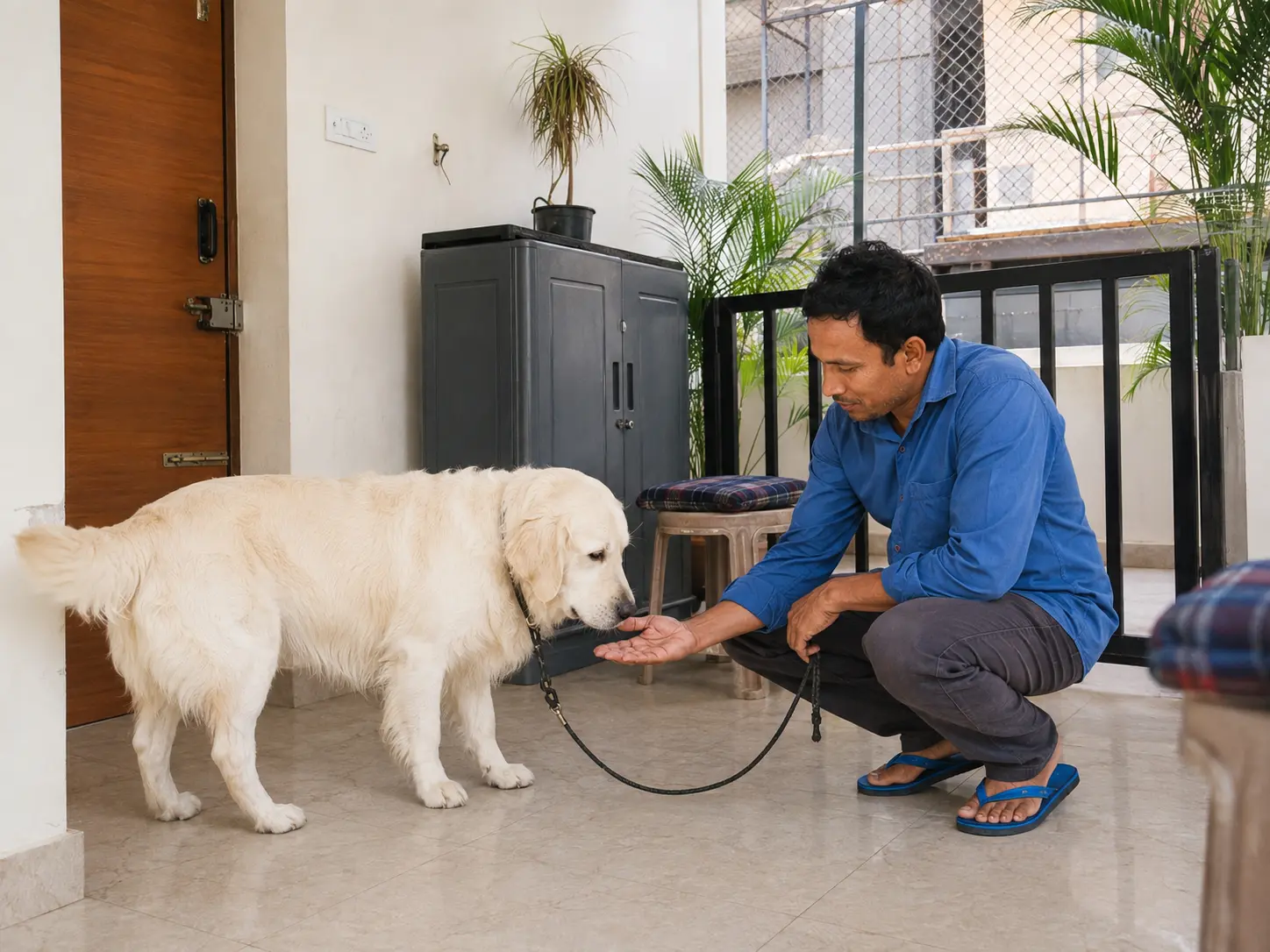
It is simply a chance to see:
How does this particular dog respond to this particular environment?
Do they explore?
Do they relax?
Do they eat?
Do they interact?
Do they need more space?
Do they settle once PawPaw leaves?
Those observations tell you much more than a glossy photo of the facility ever will.
If you have not yet decided which type of boarding setup actually suits your dog, read our Floofy 101 guide How to Choose the Right Stay for Your Dog first.
Because the best-looking place is not automatically the best place for your floofy.
05 — What should you actually pack?
Your dog is going boarding.
They are not relocating internationally.
You probably do not need three bags.
Keep it practical.
Usually useful
- Their regular food, if required by the boarding provider
- Clear feeding instructions
- Any medication with exact instructions
- Emergency contact details
- Relevant veterinary information
- Their leash/harness if requested
- A familiar comfort item if the facility allows it
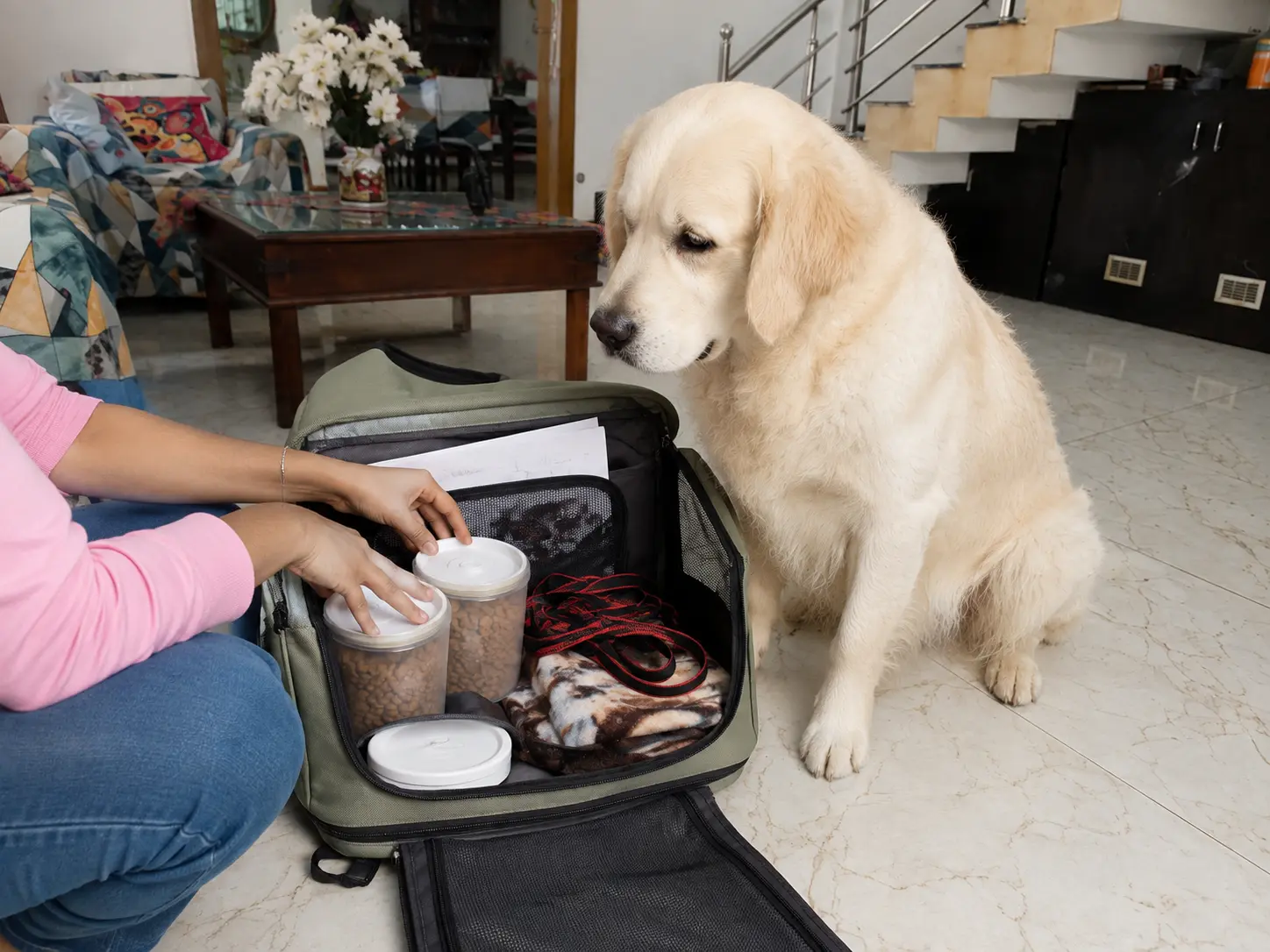
And please label things.
Because your dog’s lovingly packed chicken container looks remarkably similar to another PawPaw’s lovingly packed chicken container at 7pm.
Before packing a favourite toy or bed
Ask the boarding provider first.
Some places may prefer not to keep certain personal belongings around groups of dogs.
And sometimes the giant bed your dog apparently cannot sleep without comes back untouched because they decided someone else’s mat was vastly superior.
Floof logic.
06 — The goodbye
This part is hard.
Mostly for us.
You reach the boarding place.
Your dog gets out.
You hand over the leash.
And suddenly you feel like you need to explain seventeen years of emotional history to them before walking away.
Try not to.
A calm handover usually makes more sense than turning goodbye into a ceremony.
Say hello to the caregiver.
Share anything important.
Give your dog a normal affectionate goodbye.
Then go.
You may feel horrible for the first ten minutes.
That is okay.
But ask yourself:
If I look worried, hesitate at the gate and keep coming back for “one last cuddle,” what am I telling my dog?
Probably that there is something to worry about.
Sometimes the kindest thing PawPaw can communicate is simply:
“You’re safe. These people are okay. I’ll see you soon.”
Then let the boarding team do their job.
Even if you sit in your car outside checking your phone for the first update.
I won’t judge.
07 — What might the first day look like?
There is no single “normal” first day of boarding.
One dog walks in and immediately starts conducting property inspections.
Another spends an hour observing everyone.
Another finds one human and decides:
You. You belong to me now.
Some dogs may initially behave differently from how they behave at home simply because the environment is new.
That is why comparing dogs is not particularly useful.
Your friend’s Golden Retriever may have started playing within six minutes.
Your dog taking longer does not automatically mean something is wrong.
Ask a better question:
Is my dog gradually finding a way to settle into this environment?
Good caregivers should be watching things like behaviour, eating, resting, interactions and general comfort rather than expecting every dog to behave identically.
And you should know beforehand how the boarding provider communicates if something genuinely needs your attention.
Photos are lovely.
Information is better.
Ideally, you get both.
One small PawPaw confession
Sometimes we prepare our dogs perfectly…
…and forget to prepare ourselves.
You might refresh WhatsApp.
Zoom into a photo wondering:
Why does he look sad?
He may simply be blinking.
You might see your dog happily playing and think:
Wow. So I am completely unnecessary.
Also incorrect.
Dogs can miss us and have a good time.
Those two things are allowed to exist together.
And ultimately, isn’t that what you want?
You want your floofy to love coming home to you.
But you also want them to be capable of feeling safe and comfortable when you cannot be there.
That is a useful life skill for both of you.
08 — The 60-second PawPaw check
Before the first boarding stay, answer these honestly.
Mostly yes?
Good.
You are probably more prepared than you feel.
A few “not sure” answers?
Those are the things I would sort out before drop-off.
Not a bigger bag.
Not another toy.
Not another hour reading reviews at midnight.
Just the few things that genuinely help your dog feel understood.
One final question
When you imagine your dog’s first boarding stay, what are you actually most worried about?
That they won’t eat?
That they won’t sleep?
That they’ll miss you?
That another dog won’t suit them?
Or simply that you won’t be there to see what is happening?
Figure out your real worry.
Then talk to the boarding team about that.
Because preparing your dog for boarding is not about eliminating every possible unknown.
It is about choosing people you trust, giving them the information they need, and helping your floofy enter the experience with as little unnecessary drama as possible.
And yes…
PawPaw may still have a little drama.
We’re allowed.
Share this article
Found this worth sharing? Pass it on to another dog parent.