

Packing for your dog’s boarding stay should be simple.
It rarely is.
You start with food.
Then the leash goes in.
Then their favourite toy.
Then another toy because what if they get bored?
Then the blanket they sleep on.
Then the backup blanket.
And somewhere around this point, you realise your floofy is going away for two nights and appears to have more luggage than you do for a week.
I get it.
Packing makes us feel like we are doing something useful when we are slightly nervous about leaving them.
But your dog does not need their entire house to come with them.
What matters is that the people caring for them have the things — and the information — that actually help your dog eat, sleep, settle and stay comfortable.
So this is the boarding checklist I would use.
At a glance
- Pack your dog’s normal food unless the boarding provider says otherwise.
- Give feeding instructions that someone else can actually follow.
- Medication needs clear instructions, not assumptions.
- Send practical walking gear.
- One familiar comfort item can be enough.
- Ask before packing beds and favourite toys.
- Share emergency and veterinary information.
- Tell the caregivers the odd little things about your dog.
- Label everything.
- Do not guilt-pack.
01 — Food: keep it familiar
If your boarding provider allows or expects you to send food, I would usually stick with what your dog already eats.
Boarding is already a change.
New environment.
New smells.
Different routine.
Different humans.
Maybe different dogs.
It probably isn’t the ideal moment to also announce:
“Surprise. We have changed your dinner.”
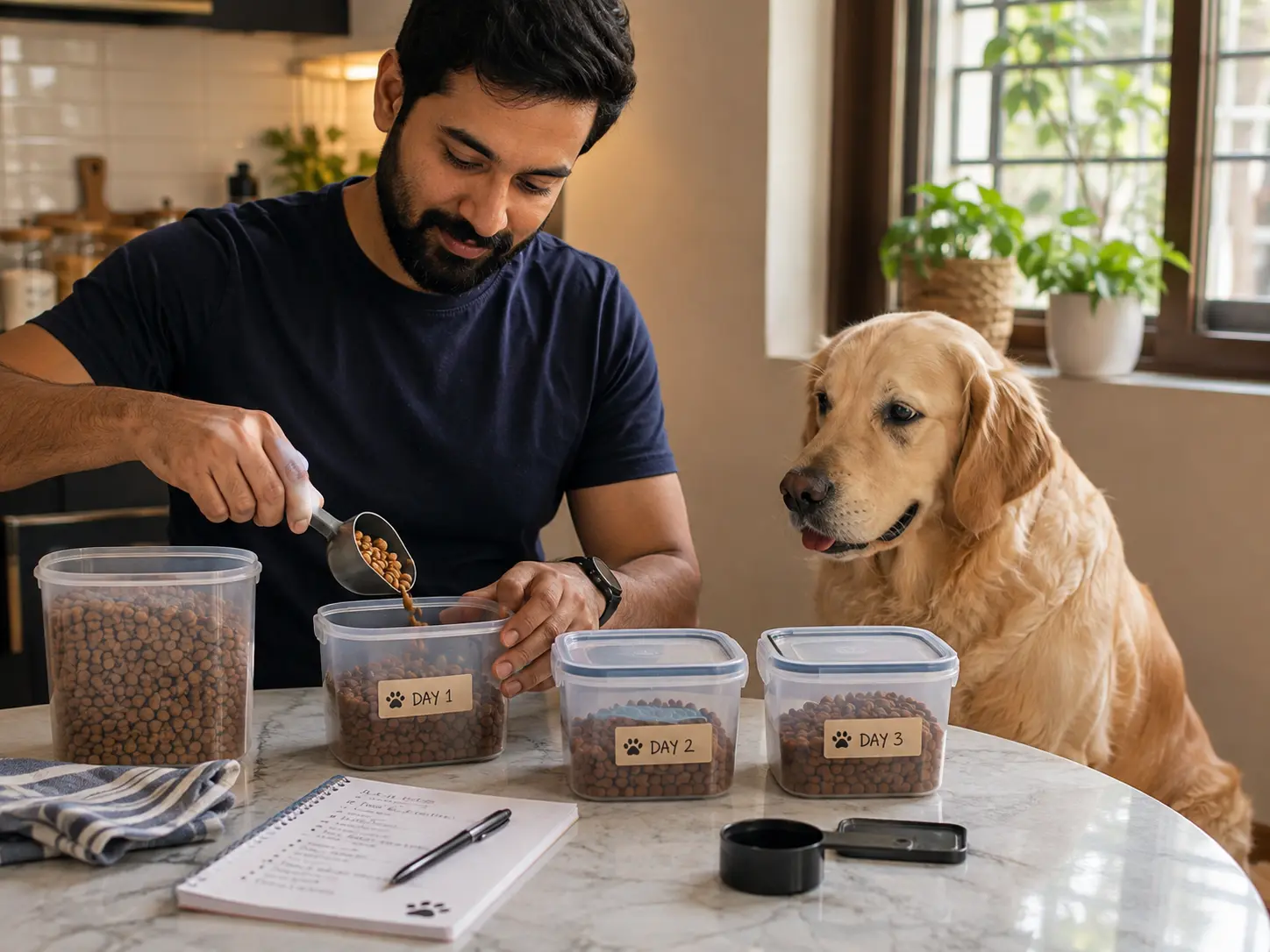
Pack enough of their regular food for the entire stay, plus a sensible little buffer if the boarding provider recommends one.
And make the feeding instructions painfully clear.
Not:
“One bowl morning and night.”
Because whose bowl?
Your dog’s small steel bowl?
The giant measuring mug in your kitchen?
PawPaws understand their own systems because we have been doing them every day.
Someone seeing them for the first time does not.
Better:
Morning: 150 g at around 8:00 am
Evening: 150 g at around 7:00 pm
If you add something to their food — water, topper, broth, supplement or anything else — say that too.
PawPaw question
If someone who had never met my dog read these instructions, could they feed them correctly without calling me?
If the answer is no, add more detail.
02 — Medication and care instructions
If your dog takes medication, this is one area where I would not rely on memory, WhatsApp history or:
“I explained it when I dropped him.”
Write it down.
Clearly.
Include things like:
- medication name
- exact amount
- timing
- whether it is given with food
- any specific administration instruction
- who to contact if there is a question
Keep medication in its proper packaging wherever possible.
And tell the boarding provider about medication before the stay, not while handing over the leash.
Some dogs are very easy to medicate.
Others see one tablet hidden inside something delicious and suddenly become forensic investigators.
You know which kind you have.
Tell the carers.
Important
If your dog has a medical condition or more complicated medication needs, discuss suitability with the boarding provider beforehand and follow your veterinarian’s instructions.
A packing checklist is not a substitute for an actual care plan.
03 — Leash, harness and walking gear
This sounds obvious until someone arrives with a dog…
…and no leash.
Yes. It happens.
For most stays, I would have:
- their usual leash
- properly fitted collar or harness
- identification tag where normally used
- any walking equipment specifically agreed with the caregiver
Use equipment your dog already knows.
Boarding day is probably not the time to unveil the exciting new harness you bought yesterday and discover your dog walks backwards whenever it appears.
Also check the condition of the gear before packing it.
A leash that has been “mostly fine” for eight months but is now being held together by optimism is worth replacing before the stay.
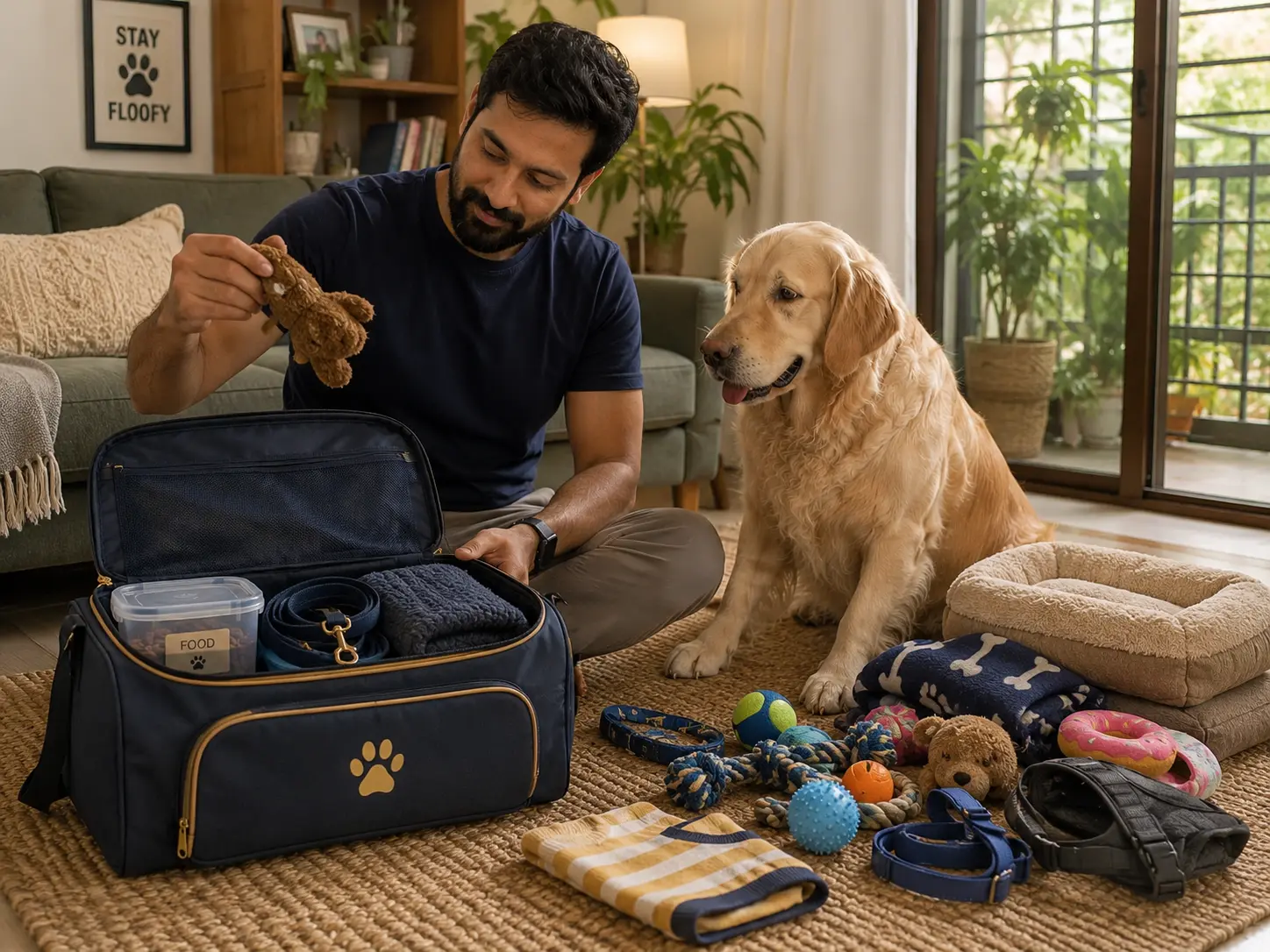
04 — Should you pack their bed and toys?
This is where PawPaw luggage starts getting out of hand.
Your dog has a favourite blanket.
A favourite ball.
A favourite rope.
A favourite stuffed duck that looks like it survived a small war.
Surely they need all of them?
Maybe.
But ask the boarding provider first.
Different care environments have different rules around personal items, especially when dogs share spaces.
A toy your dog happily ignores at home may suddenly become:
MY DUCK. MY PROPERTY. MY CONSTITUTIONAL RIGHT.
Beds can also be impractical in some setups.
And sometimes the dog who apparently cannot sleep without their ₹4,000 orthopedic bed decides that the cool floor beside another dog is perfect.
Floof logic remains undefeated.
What I would usually consider
If allowed:
- one familiar blanket
- one small comfort item
- maybe one familiar toy if appropriate
You are trying to give them a little piece of familiarity.
Not recreate your living room.
05 — The information I’d never forget
Some things do not physically go inside the boarding bag.
They are still part of packing.
Make sure the caregiver has the information they actually need.
That may include:
- your contact details
- an alternate emergency contact
- your veterinarian’s details
- relevant vaccination/health information required by the provider
- medication information
- feeding routine
- known allergies or sensitivities
- important behaviour information
And please update outdated information.
The emergency contact you added three years ago who has since moved to Canada may not be your strongest option.
One useful test
Ask yourself:
If I were unreachable for two hours and the caregiver needed to make a sensible decision for my dog, have I given them enough information?
That is the level of preparedness I want.
06 — What I probably wouldn’t pack
This depends on the boarding provider, of course.
But generally, I would avoid sending things just because leaving them behind makes me feel guilty.
Potential candidates:
Their entire toy collection
Your dog is not opening a branch office.
Multiple giant beds
Ask what is actually useful first.
Brand-new treats they have never eaten
New environment + mystery snack is not an experiment I particularly need.
Expensive sentimental objects
If losing it would emotionally destroy you, perhaps don’t send it into a dog-care environment.
Clothes they do not normally wear
Unless there is a real reason and it has been discussed.
Enough food for an expedition to Antarctica
Pack appropriately for the stay.
A little sensible backup?
Fine.
Five kilograms extra for a weekend?
PawPaw, step away from the scoop.
07 — The bag nobody remembers: your dog’s operating manual
Honestly, this matters more to me than half the physical things in the bag.
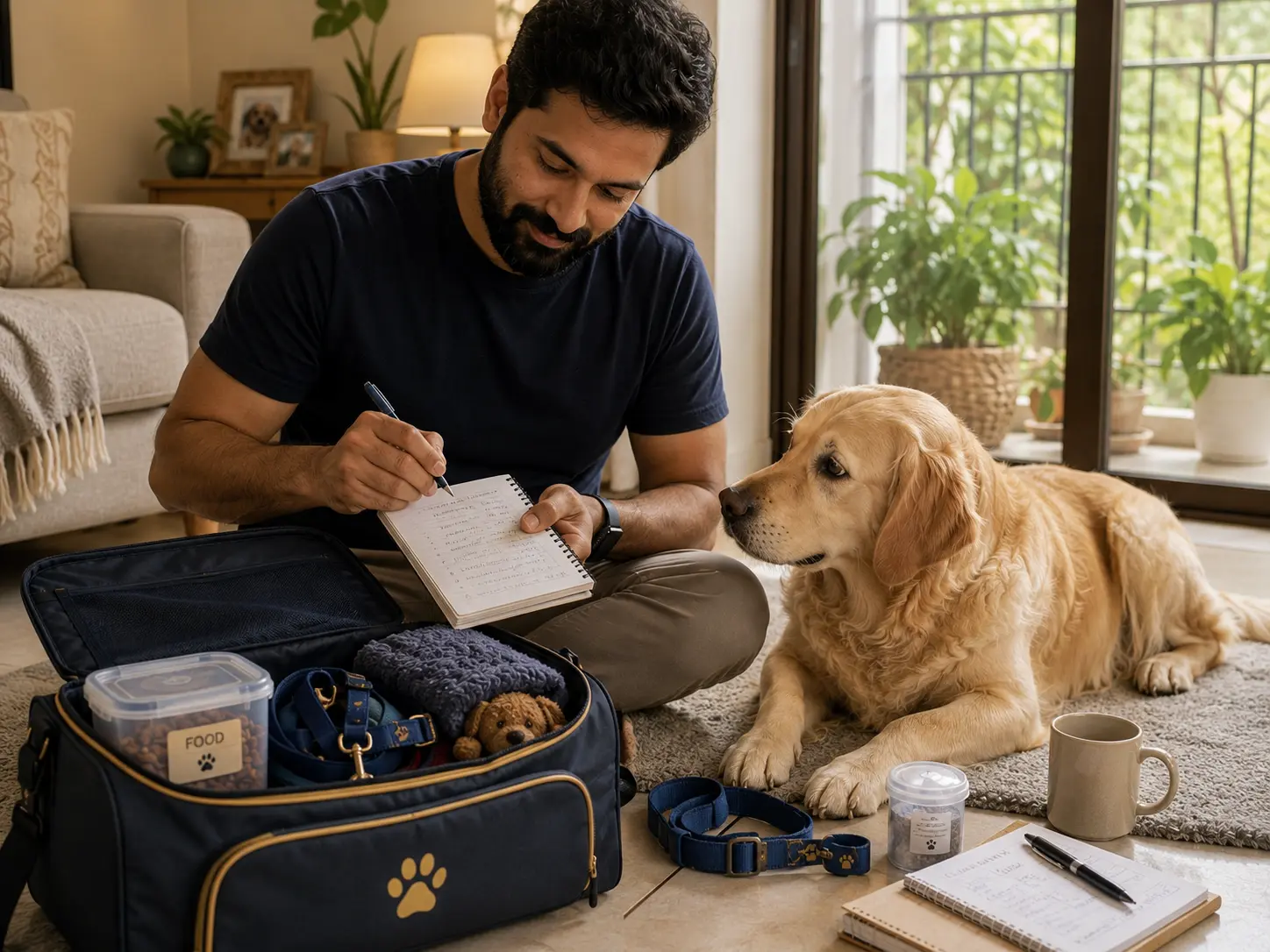
Every floofy comes with settings.
You already know them.
The caregiver does not.
Things like:
“He won’t eat immediately after exercise.”
“She likes someone sitting nearby while she eats.”
“He hates the sound of pressure cookers.”
“She sleeps under a table when she wants to be left alone.”
“He guards chews but not toys.”
“If she walks to the door and stares at you, she needs to pee.”
“He will tell you he hasn’t eaten even when he absolutely has.”
That information is gold.
Your dog’s quirks are not embarrassing.
They are instructions.
Tell caregivers about
- feeding habits
- toilet cues
- sleep routine
- fears
- triggers
- resource guarding
- separation behaviour
- dog preferences
- human preferences
- handling sensitivities
- things that help them settle
And if something sounds slightly ridiculous?
Tell them anyway.
The ridiculous detail is often the useful one.
One thing I would label
Everything.
Food container.
Medication.
Leash if multiple dogs are staying.
Blanket.
Bag.
Not because your belongings are likely to disappear into another dimension.
Because dog-care environments become surprisingly confusing when three PawPaws arrive with:
- transparent food containers
- black leashes
- blue towels
- stainless-steel bowls
and everybody says:
“You’ll know which one is ours.”
We will not.
Please label it.
What about vaccination records?
Follow the specific requirements of your boarding provider.
If they ask for vaccination or other health records, have them ready before drop-off.
Not:
“I’ll find the photo somewhere in WhatsApp.”
You don’t want boarding morning turning into an archaeological search through 14,000 images.
This is also exactly the kind of dog-parent paperwork that becomes much easier when you keep important care records organised instead of hunting for them every time you need them.
08 — The PawPaw Boarding Checklist
Before you close the bag, run through this.
Food
Medication & health
Walking
Comfort
Information
PawPaw
The 30-second bag test
Before leaving home, ask yourself four questions.
Can they feed my dog correctly?
Can they safely walk and handle my dog?
Do they know what my dog needs if something feels off?
Do they know the little things that help my dog feel normal?
If yes, you’re probably packed.
Everything else is mostly luggage.
And if you are still tempted to add one more thing…
I know.
You look at your floofy.
Then at the bag.
Then back at your floofy.
And suddenly that second blanket feels extremely important.
Before adding it, ask:
Is this for my dog — or for me?
Sometimes the answer is genuinely your dog.
Pack it.
Sometimes the answer is PawPaw anxiety.
Leave it at home.
Your dog does not need every familiar object they own.
They need familiar food, clear care, people who understand them, and enough information for those people to make good decisions.
That is a much better boarding bag.
And it is considerably easier to carry.
Share this article
Found this worth sharing? Pass it on to another dog parent.