

You pick your dog up after boarding.
They see you.
Tail goes mad.
You get the dramatic reunion.
You go home thinking:
Okay. Everything is back to normal.
And then your floofy sleeps for six hours.
Or follows you into every room.
Or eats half their dinner and walks away.
Or drinks more water than usual.
Or looks at you with the expression of someone who has just returned from a three-day corporate offsite.
And PawPaw brain immediately starts:
Why are they so tired?
Why are they suddenly clingy?
Did something happen?
Are they upset with me?
Why aren’t they eating normally?
Do they hate boarding?
Sometimes a dog can come home from boarding and behave a little differently simply because they have just had a few days of different people, smells, sleep, stimulation and routine.
AKC notes that dogs respond very differently to boarding: some enjoy the activity and social interaction, while others find the experience more stressful. VCA also notes that dogs unfamiliar with boarding may eat or drink less while adjusting.
But — and this matters — “they’ve just been boarding” should never become an excuse to ignore something genuinely wrong.
So here is how I would think about that first day back home.
At a glance
- A tired dog after boarding is not automatically an unhappy dog.
- Give your floofy a calm return to their normal routine.
- Appetite and behaviour can sometimes be a little different after a change in environment.
- Extra clinginess doesn’t automatically mean boarding harmed them.
- Don’t judge the whole stay from the first ten minutes after pickup.
- Ask the boarding provider what your dog actually did during the stay.
- Vomiting, persistent diarrhoea, obvious pain, breathing problems, injury or significant lethargy deserve more attention.
- Look for direction: is your dog gradually becoming more like themselves?
01 — Why does my dog seem different after boarding?
Think about what your dog’s last few days may have looked like.
Different place.
Different sleep.
Different sounds.
Different humans.
Maybe different dogs.
Maybe more play than usual.
Maybe less deep daytime sleep because everything was interesting.
Then suddenly:
PawPaw! Car! Home! My sofa! My smell! My bed!
That is another transition.
Dogs are very tuned into routines and environmental changes, and unfamiliar people, animals, places and altered routines can affect behaviour.
So my first question would not be:
I would ask:
Those are different questions.
If your dog comes home tired, eats a little differently and wants to stay close to you — but gradually returns to their usual rhythm — I look at that very differently from a dog whose behaviour keeps getting worse or who appears physically unwell.
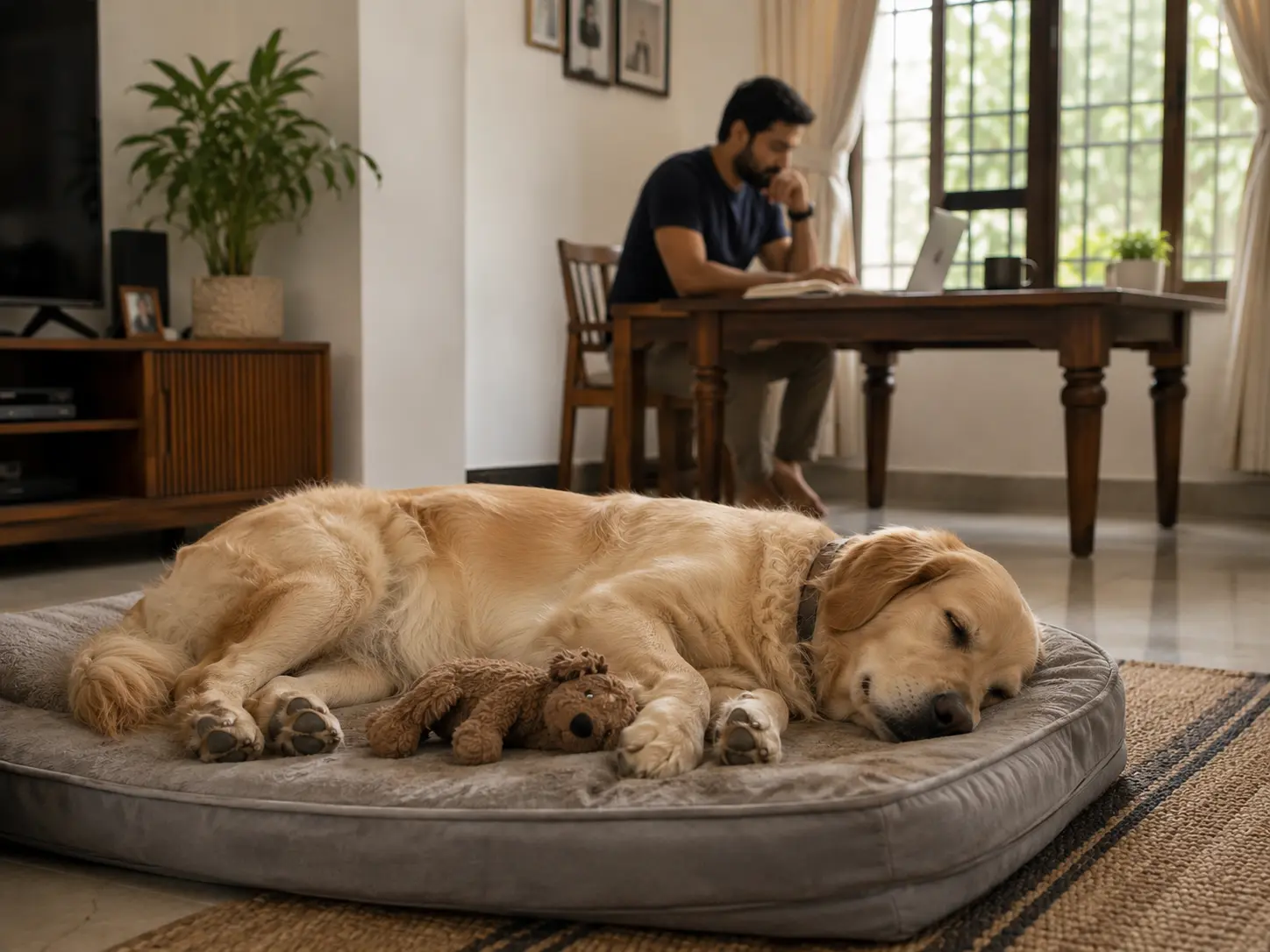
02 — They came home and slept forever
This is probably one of the most common PawPaw worries.
You collect your dog.
They look happy.
Come home.
Drink some water.
Find their favourite sleeping spot.
And disappear into what looks like a medically induced coma.
Your immediate thought:
What did they do to my dog?
Possibly nothing dramatic at all.
A boarding environment can simply be more stimulating than home.
More smells.
More movement.
Different sounds.
Maybe other dogs.
More things worth staying awake for.
PetMD notes that dogs may come home from daycare or boarding and sleep heavily afterward because they have been excited or alert during the stay.
And honestly, I see the same thing with humans.
Go away for a busy three-day trip.
Come home.
Your own bed suddenly becomes the finest object humanity has ever created.
Let them rest.
Keep the house fairly calm.
Offer their usual water.
Return to their normal meal/walk routine gradually.
I would not immediately compensate with:
“You missed PawPaw! LET’S GO FOR THE BIGGEST WALK OF YOUR LIFE.”
Your dog may have absolutely no interest in your reunion fitness programme.
This distinction is important.
A tired dog:
- sleeps
- wakes normally
- responds to you
- gets up when something interesting happens
- gradually returns to their routine
A dog that seems profoundly lethargic, weak, unusually unresponsive or unwilling/unable to get up deserves more attention.
PetMD specifically distinguishes expected tiredness after significant exercise/daycare/boarding from unexplained lethargy, which can have medical causes and may need veterinary assessment.
So:
Sleeping a lot after an active stay?
Maybe completely understandable.
Something about your dog’s physical state feels genuinely wrong?
Don’t dismiss it as “boarding tiredness.”
03 — Their appetite seems different
Another classic.
Your dog usually behaves like dinner has not been served since 1998.
Then they come home from boarding and stare at the bowl like:
I’m considering my options.
Changes in routine or environment can affect eating, and VCA notes that dogs inexperienced with boarding may sometimes have reduced appetite or water intake during early stays.
That doesn’t mean every appetite change should automatically be labelled “stress.”
It means I would look at the whole dog.
- Did the boarding team say they ate normally?
- When did they last eat?
- Are they drinking?
- Are they interested in treats?
- Are they otherwise alert?
- Any vomiting?
- Any diarrhoea?
- Are they showing discomfort?
There is a big difference between:
“He ate less dinner tonight.”
and
“He won’t eat, won’t drink, seems weak and has vomited twice.”
Context matters.
I would not immediately start offering seven different foods because PawPaw has entered panic-catering mode.
You know how this goes.
Dog doesn’t eat regular dinner.
So we add chicken.
Then cheese.
Then treats.
Then something from our plate.
By 9pm your dog has learned:
Apparently refusing kibble unlocks the tasting menu.
Unless your vet or care plan says otherwise, I would generally try to bring the dog back towards their familiar routine rather than redesigning their diet in one evening.
04 — Why are they suddenly so clingy?
This one hits PawPaws emotionally.
Your dog comes home and suddenly:
follows you to the kitchen.
Bathroom.
Bedroom.
Balcony.
Back to kitchen.
You sit down.
They sit on your foot.
And you think:
They thought I abandoned them. I have emotionally damaged my child forever.
Maybe not.
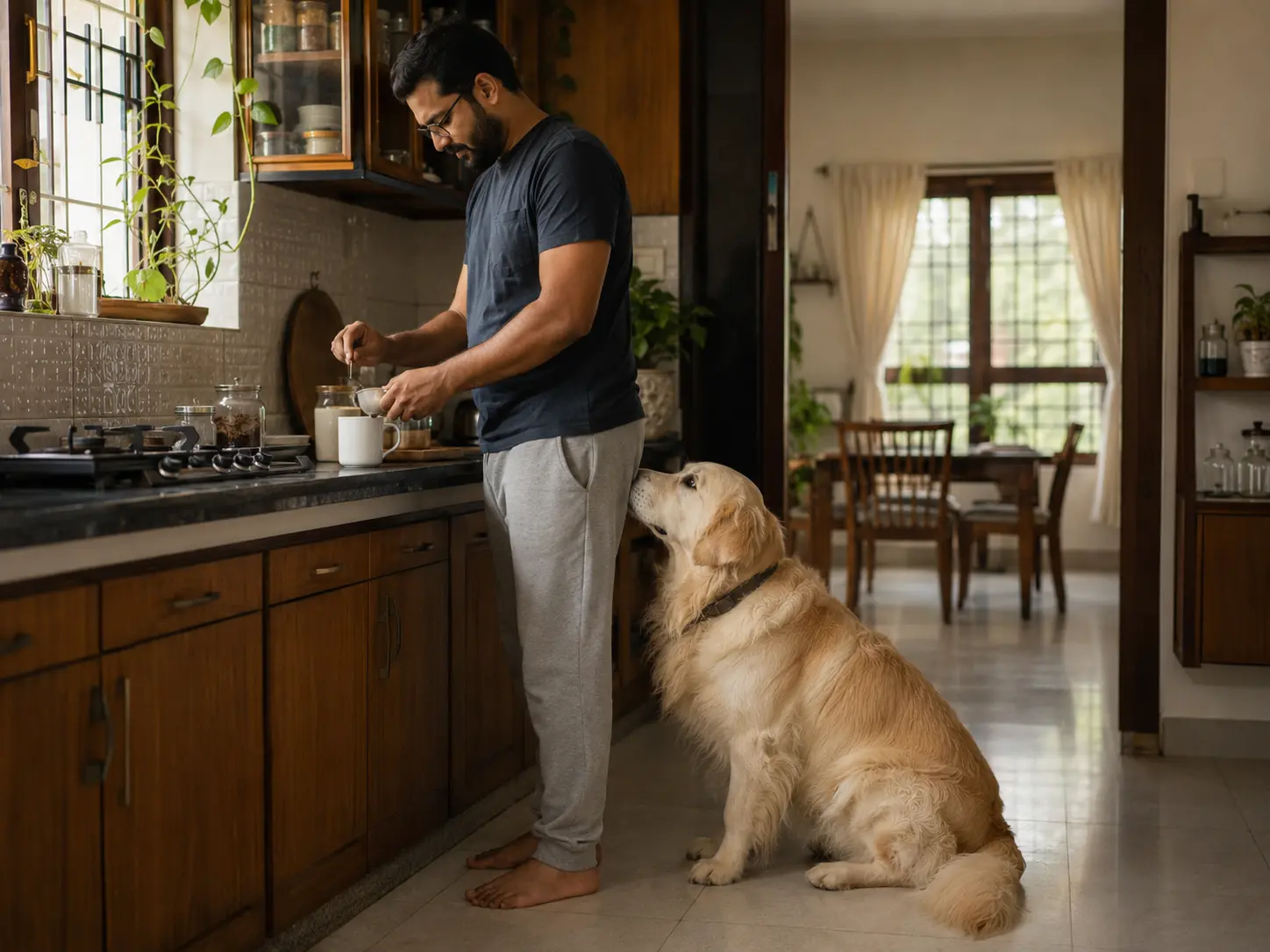
Some dogs are naturally more proximity-seeking after a separation or big routine change.
Clinginess can have many possible explanations — temperament, learned behaviour, anxiety, change, health issues — and being clingy is not by itself the same thing as clinical separation anxiety.
So I would not diagnose a dog based on:
“He followed me everywhere the evening he came home.”
I would simply notice it.
Give them normal affection.
Return to normal life.
And watch what happens.
This is a PawPaw trap.
Your dog follows you.
You feel guilty.
So every time they look worried, you:
hug them,
talk to them,
call them over,
give a treat,
say “PawPaw is here, PawPaw is never leaving you again.”
Now the whole house feels like something enormous happened.
Sometimes what helps most is:
Normal.
Dinner.
Potty break.
Sofa.
PawPaw nearby.
Life continues.
05 — What about zoomies and wild reunion energy?
Some dogs do the exact opposite of sleeping.
They get home and become possessed.
Running.
Toy.
Sofa.
PawPaw.
Zoom.
Water.
Toy again.
They have returned from boarding with what appears to be 48 hours of stored nonsense.
A very excited reunion doesn’t tell me by itself whether the boarding stay was good or bad.
Your dog may simply be:
- happy to see you
- stimulated from the journey
- excited to be home
- overtired
- releasing pent-up energy
AKC suggests looking at the dog’s overall condition and body language at pickup rather than relying on a single reaction; they specifically mention signs such as excessive panting, drooling or stiff body language as things worth noticing.
So enjoy the reunion.
But then help the house come back down to earth.
06 — When I would pay closer attention
This is where the article stops being:
“Don’t worry, PawPaw.”
Because sometimes you should worry enough to ask a professional.
Not panic.
Ask.
I would pay more attention if I saw things like:
- repeated vomiting
- persistent or significant diarrhoea
- blood in vomit or stool
- obvious pain
- limping/injury
- difficulty breathing
- significant coughing
- unusual weakness
- inability/unwillingness to stand normally
- refusing both food and water
- worsening rather than improving behaviour
- anything dramatically outside my dog’s normal physical state
Stress and environmental changes such as boarding can contribute to diarrhoea in some dogs, but diarrhoea also has many infectious and non-infectious causes, which is exactly why persistent or significant symptoms shouldn’t simply be blamed on boarding.
Behaviour can be information.
If you know your dog and something feels seriously off, use that information.
You don’t need to prove that boarding caused something before calling your vet.
07 — What I’d ask the boarding provider
There is another person who may have useful information:
the person who was actually with your dog.
Before constructing the entire story in your head, ask them.
Which brings me to…
You don’t need a forensic investigation.
Just useful context.
Maybe your dog already skipped breakfast that morning.
Useful to know.
Were they settling overnight?
Resting during the day?
Maybe the reason your dog is exhausted is that they spent yesterday playing far more than they normally do at home.
Ask.
Again: ask.
More withdrawn?
More social?
Needed more rest?
Simple information that makes your first evening home easier to interpret.
Good handover information is worth considerably more to me than:
“He had sooo much fun! ❤️”
Lovely.
Also…
What did he eat?
Did he poop?
Did he sleep?
Give me the useful stuff too.
This is another PawPaw speciality.
You receive one photograph from boarding.
Your dog looks sideways.
You zoom in.
His eyes look different.
Why is his ear down?
He doesn’t look happy.
He has emotionally given up.
Or…
He blinked.
A photo is a fraction of a second.
I like updates.
But I value observations more.
How your dog is eating, sleeping, interacting, resting and behaving gives you much more context than trying to psychoanalyse one JPEG.
Unless there is a reason not to, I would keep it boring.
And boring is a compliment.
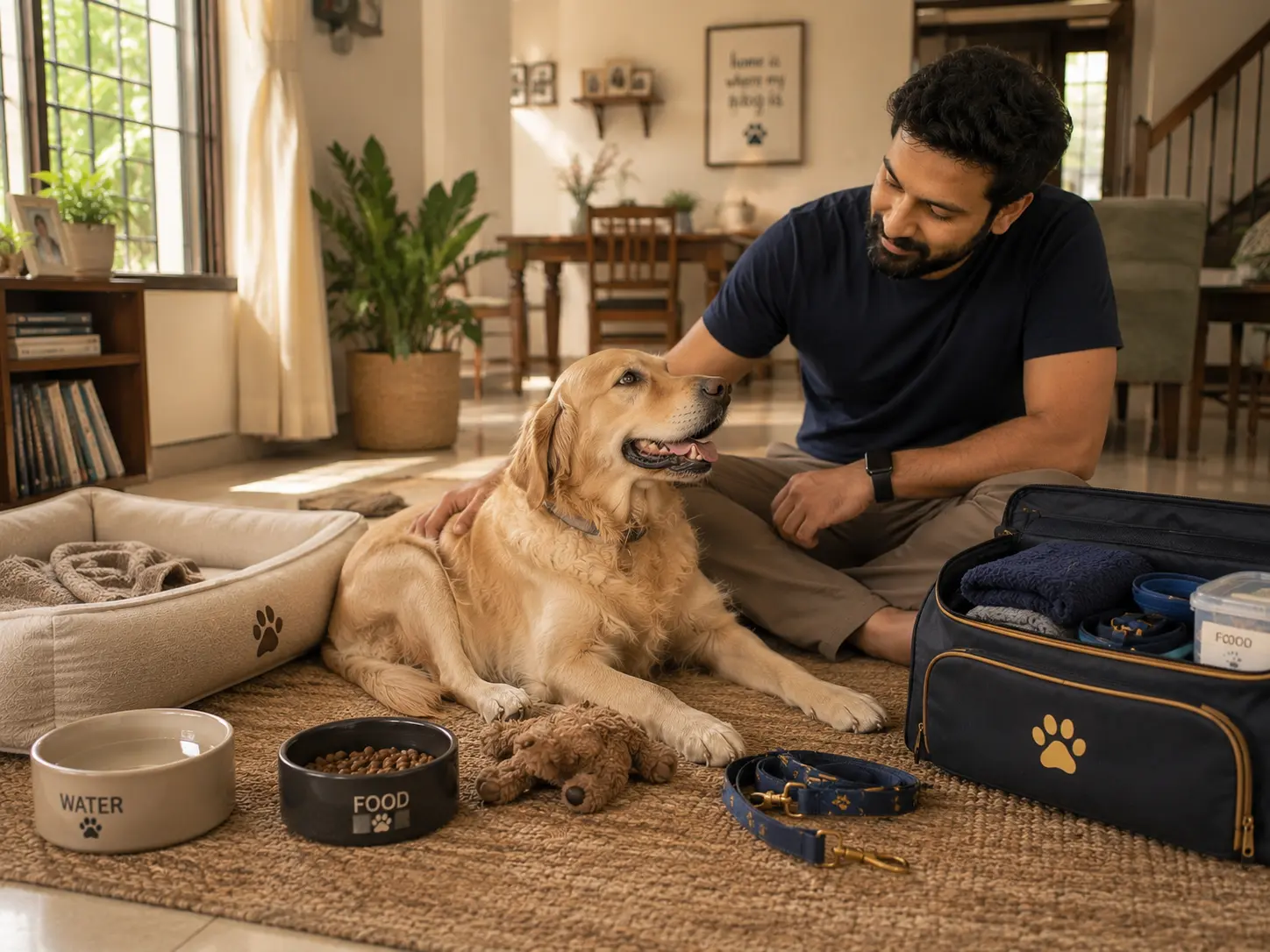
Back to:
- normal water
- familiar food
- usual toilet spot
- familiar sleeping area
- normal affection
- calm environment
Maybe skip the giant welcome-home party.
Your dog has already had enough content for one week.
Sometimes we are the weird ones after boarding.
Your dog comes home.
They sleep peacefully.
Meanwhile you are standing over them every 14 minutes asking:
“Are you okay?”
Dog opens one eye.
I was.
I understand.
We miss them.
And because we weren’t there, there is a little gap in our information.
PawPaw brain dislikes information gaps.
So we fill them with stories.
Usually dramatic ones.
Try to replace the story with observations.
08 — The 24-hour PawPaw check
When your dog comes home, I would look at the whole picture.
Not one behaviour.
Not one meal.
Not one nap.
If your dog is:
- tired but responsive
- eating reasonably
- drinking
- moving comfortably
- toileting
- interested in you
- gradually getting back into normal rhythm
then I would usually give them some quiet time and continue watching.
If you are wondering:
- Did they eat?
- Did they sleep?
- Were they playing constantly?
- Did they have loose stools there?
- Did anything happen physically?
- Were they unusually stressed?
Ask.
That information belongs in the handover.
If your dog appears physically unwell, has significant/persistent gastrointestinal symptoms, seems in pain, is unusually weak, has breathing difficulty, or something about their condition is genuinely concerning, get veterinary advice rather than assuming it is a normal boarding adjustment.
You know your dog’s usual baseline better than any article does.
Use it.
After boarding, PawPaws often ask:
I think there is a better question.
Because dogs are individuals.
Mars-normal may not be Asteroid-normal.
Your dog’s normal might be:
sleep 14 hours,
eat immediately,
follow you around,
then steal your slipper.
Another dog may need half a day before deciding civilisation has resumed.
The direction matters.
This is worth saying.
A dog being exhausted doesn’t automatically mean they had a bad stay.
A dog being thrilled to see you doesn’t mean they were miserable without you.
A dog being clingy for an evening doesn’t automatically mean they developed separation anxiety.
And a dog walking into the house and immediately falling asleep does not mean they have filed a formal complaint.
Look at:
the whole stay, the handover, their physical condition, their behaviour and how they settle back home.
That tells you much more.
Your floofy may simply need dinner, their own bed and one extremely uneventful evening.
Sometimes coming home is an adjustment too.
Sources
For the health/behaviour boundaries in this article, useful veterinary/reference sources include the American Kennel Club’s boarding guidance, VCA Animal Hospitals’ boarding guidance, and veterinarian-reviewed PetMD resources on post-activity lethargy, anxiety and clingy behaviour.
Share this article
Found this worth sharing? Pass it on to another dog parent.