

There is no single “best” way to leave your dog when you travel.
I know that sounds annoyingly unhelpful.
But hear me out.
A beautiful home boarding setup can be completely wrong for one dog.
A structured kennel can actually suit another.
And a pet sitter staying in your home may be the easiest option for a floofy who thinks leaving their sofa is a human rights violation.
The mistake I see PawPaws make is starting with:
“Which option is best?”
I would start with:
“Which option is best for my dog?”
Because the answer depends much more on your floofy than the label on the service.
At a glance
- Home boarding suits many dogs who enjoy household life and some social company.
- Kennels can work well for dogs who handle structured environments comfortably.
- Pet sitting can reduce environmental change for dogs who prefer staying home.
- “Cage-free” does not automatically mean stress-free.
- “Kennel” does not automatically mean bad.
- A beautiful property can still be the wrong fit.
- Your dog’s sleep, social style, routine, medical needs and ability to settle matter more than Instagram.
- Trial stays are useful when you are not sure.
01 — Start with your dog, not the care model
Imagine three dogs.
Dog A walks into somebody else’s house and within four minutes has found the water bowl, inspected the kitchen and selected a sofa.
Dog B likes people but gets overwhelmed when several unfamiliar dogs are around.
Dog C wants absolutely nothing to do with your exciting holiday arrangements and would prefer to remain at home judging the neighbour through the window.
Same city.
Same travel dates.
Three completely different care needs.
So before comparing facilities, ask yourself:
- Does my dog enjoy other dogs?
- Do they actually rest around other dogs?
- How important is their usual home environment?
- Can they sleep somewhere unfamiliar?
- How do they react to new humans?
- Do they need close supervision?
- Are they comfortable with a more structured setup?
- Do they have medical or mobility needs?
- Do they get stressed when routines change?
That tells me much more than:
“This place has 4.9 stars.”
02 — Home boarding: who tends to suit it?
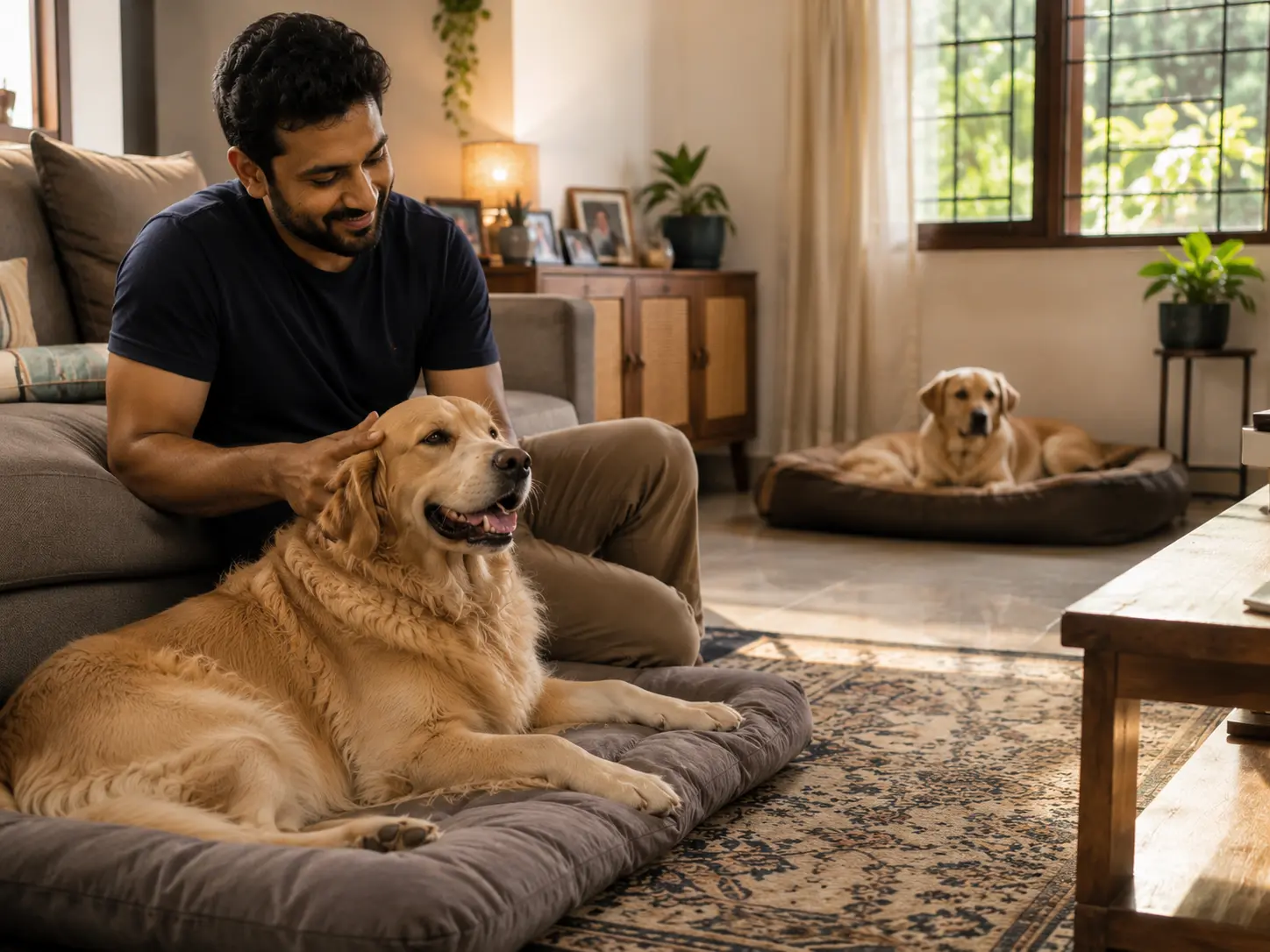
Home boarding generally means your dog stays in somebody’s home rather than a traditional kennel-style facility.
That can feel familiar because there may be:
- sofas
- humans around
- household sounds
- normal rooms
- everyday routines
- fewer dogs than a large facility
For some floofies, that works beautifully.
Especially dogs who already understand:
Humans live in houses. I also live in houses. Excellent.
Home boarding may suit a dog who:
- enjoys household environments
- settles around people
- is reasonably comfortable with other compatible dogs
- likes being part of everyday activity
- rests well without needing total isolation
- benefits from more home-like supervision
But there is an important bit PawPaws sometimes miss:
Home boarding is still not your home.
Different humans.
Different smells.
Different rules.
Potentially resident dogs.
Potentially visiting dogs.
Different sleep spots.
So “home-based” does not automatically mean your dog will feel instantly at home.
The social part matters
A dog liking other dogs on walks does not automatically mean they want to live with other dogs for three days.
Those are different skills.
Think about yourself.
You may enjoy meeting friends for dinner.
That does not necessarily mean you want all of them moving into your bedroom until Monday.
Dogs need downtime too.
So with home boarding I would always ask:
- How many dogs stay together?
- How are introductions done?
- Can dogs rest separately if needed?
- What happens if two dogs do not suit each other?
- Are resident dogs part of the setup?
- How is food managed?
- How are toys/chews managed?
- Where does my dog sleep?
The word home tells you the setting.
It does not tell you how the care is actually managed.
03 — Kennels: when structure can actually help
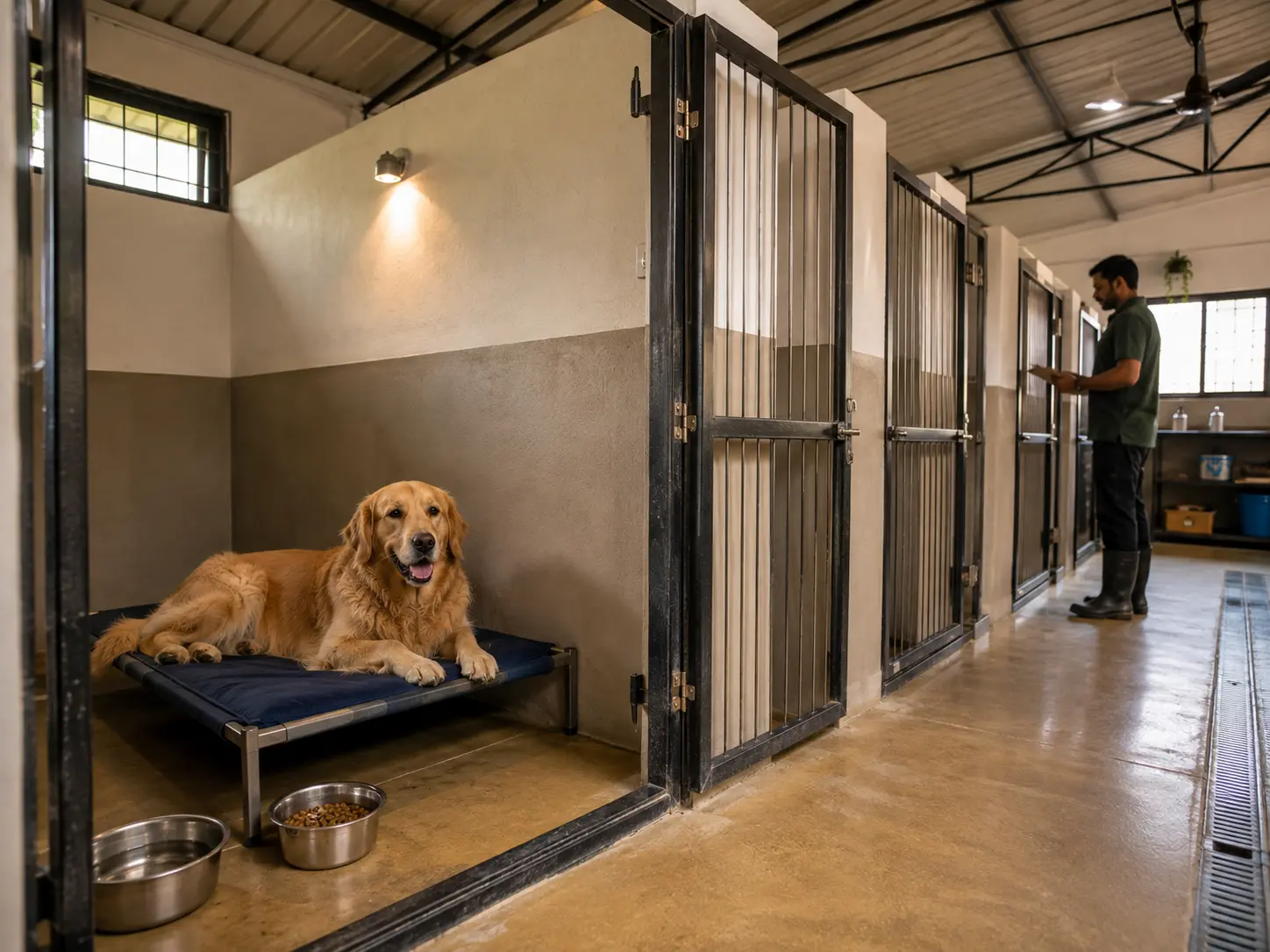
The word kennel makes some PawPaws uncomfortable.
It can immediately create an image of:
metal bars,
rows of barking dogs,
and your floofy staring dramatically into the middle distance.
But kennel-style care varies enormously.
Some facilities are highly structured, clean, quiet and professionally managed.
And some dogs actually cope well with predictable structure.
A kennel-style environment may suit a dog who:
- is comfortable spending periods independently
- benefits from clear routine
- doesn’t need constant household interaction
- can settle in a defined sleeping/resting area
- may need more physical separation from unfamiliar dogs
- is accustomed to crate/kennel-like spaces
For the right dog, having:
your own area → exercise → food → rest → repeat
can be easier to understand than a busy shared household.
Structure is not automatically cruel
This is where I think pet-parent language sometimes becomes too simplistic.
“Cage-free good.”
“Kennel bad.”
I wouldn’t choose that way.
A dog forced into constant group interaction with nowhere to decompress may be more stressed than a dog who has a calm private resting space.
The question is not:
“Does the facility use kennels?”
The better question is:
“How does my dog spend their day, and can they genuinely rest?”
That answer matters much more.
04 — Pet sitters: when home is the easiest option
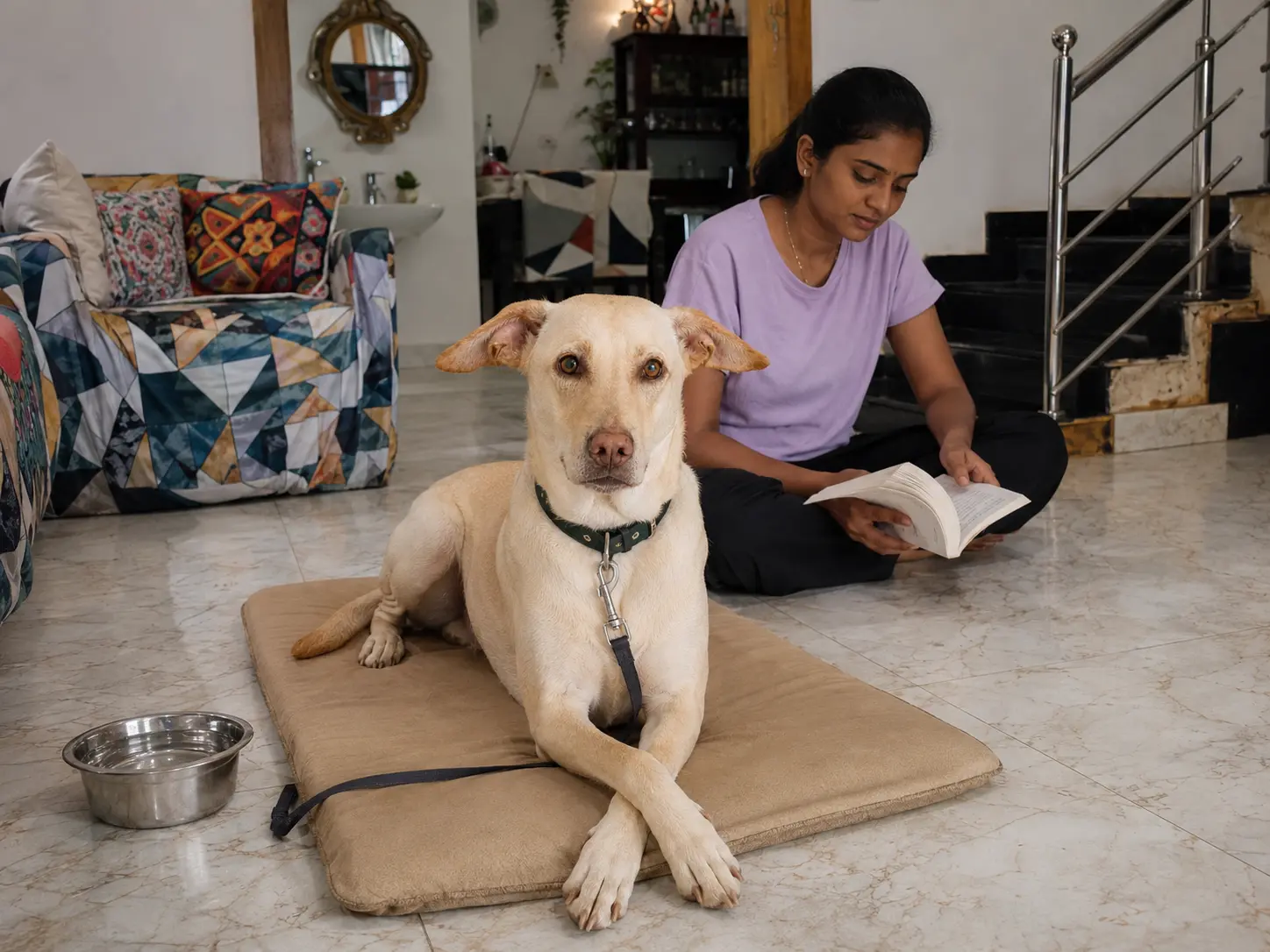
Then there is the option that involves changing almost nothing for your dog.
PawPaw leaves.
A trusted human comes in.
Your dog keeps:
- their bed
- their smells
- their food setup
- their normal walking area
- their favourite suspicious spot beside the refrigerator
For some dogs, this is a huge advantage.
Pet sitting may suit a dog who:
- is very attached to their environment
- dislikes unfamiliar dogs
- struggles with environmental change
- is older or less mobile
- has a routine that is easiest to maintain at home
- lives with multiple pets who are simpler to care for together
- is comfortable with the sitter
But again:
staying home is not automatically easier.
If your dog is deeply attached to you rather than the house, then having PawPaw disappear while the house remains may still be difficult.
And the quality of pet sitting depends enormously on:
- how much time the sitter is actually present
- whether they stay overnight
- how well they know the dog
- how emergencies are handled
- whether the home is left secure
- how walks and feeding are managed
“Pet sitter” can mean anything from:
someone lives with your dog while you’re away
to
someone visits twice a day for twenty minutes.
Those are not the same service.
One question I really like
Where does my dog relax best when I am not there?
Not:
Where do they have the most fun?
Not:
Where are the prettiest photos?
Relax.
Because boarding is not a 72-hour birthday party.
Dogs need to:
eat,
sleep,
poop,
walk,
observe,
play,
rest,
and sometimes do absolutely nothing.
A good care setup allows all of those things.
05 — The questions I’d use to choose
Forget labels for a moment.
I would ask these instead.
How social is my dog really?
Not:
“Does he like dogs?”
Ask:
“Can he relax around dogs?”
Big difference.
What happens when my dog is overwhelmed?
Do they:
- walk away?
- hide?
- bark?
- growl?
- freeze?
- get overexcited?
- become clingy?
Pick a care model that can handle the answer.
How important is home territory?
Some dogs sleep anywhere.
Some dogs believe:
my bed → my fan → my exact corner → no negotiations.
Know your dog.
Does my dog need lots of human contact?
Some floofs follow humans everywhere.
Others consider us useful primarily at meal times.
Again:
know your employee.
How complicated is their care?
Think:
- medication
- mobility
- allergies
- food
- toilet routine
- triggers
- sleep
- handling sensitivity
The more complicated the care, the more carefully I would evaluate the person and environment rather than simply the category.
06 — What each option can get wrong
Every care model has trade-offs.
Home boarding can go wrong when:
- too many dogs are mixed together
- introductions are rushed
- dogs cannot get enough rest
- food/toys create conflict
- the home setup looks casual but supervision is weak
- resident and guest dogs are not truly compatible
Kennel care can go wrong when:
- dogs experience too much noise
- individual interaction is limited
- exercise is insufficient
- dogs spend too long confined
- routines are designed around operational convenience rather than the dog
Pet sitting can go wrong when:
- actual presence is much lower than PawPaw expected
- the sitter does not understand the dog’s behaviour
- walks/feeding instructions are inconsistent
- emergencies are not planned
- the dog struggles being home without their family
No care model gets a free pass because of its label.
07 — Don’t choose from photos alone
This is difficult because photos are persuasive.
Big lawn.
Beautiful room.
Happy Labrador.
Sunset.
Person hugging dog.
You think:
SOLD.
But photos cannot show you:
- overnight routine
- conflict management
- how dogs are introduced
- whether dogs actually sleep
- supervision gaps
- feeding management
- emergency decisions
- whether your dog individually fits the setup
A gorgeous facility may genuinely be excellent.
It may also genuinely be wrong for your floofy.
Both things can be true.
Reviews are useful — but read them differently
Don’t only count stars.
Look for details.
A useful review might tell you:
- what kind of dog they had
- how long the stay was
- whether it was their first stay
- how communication worked
- how the dog settled
- whether something difficult happened
- how the caregiver handled it
“Amazing place!!! 5 stars!!!”
Lovely.
But it doesn’t tell me much about whether Mars will sleep there.
What I would ask before deciding
Whichever option you choose, ask:
- Where will my dog sleep?
- How much time will they spend alone?
- How many dogs might they interact with?
- How are introductions done?
- How is food managed?
- Can dogs rest away from one another?
- Who is physically present overnight?
- What happens if my dog doesn’t settle?
- What happens if my dog becomes unwell?
- How will you contact me?
- What do you need to know about my dog before accepting the booking?
And one of my favourites:
“Have you ever told a PawPaw that your setup was not right for their dog?”
I like businesses that can say no.
Because suitability matters more than filling a booking.
Trial stays are underrated
If you genuinely don’t know how your dog will respond, you do not always need to solve the entire question theoretically.
Try something smaller.
A visit.
A few hours.
Day care.
A single night.
Then observe.
Did your dog:
- explore?
- rest?
- eat?
- interact?
- constantly stay alert?
- settle after you left?
- recover normally afterward?
That real information can tell you much more than twenty Google tabs.
If this is your dog’s first stay, our First Time Boarding Your Dog guide goes deeper into how I would prepare before drop-off.
08 — The PawPaw Fit Check
Choose the answer that sounds most like your dog.
My dog loves household life and comfortable company
They:
- like humans nearby
- enjoy compatible dogs
- settle in normal rooms
- can rest around everyday activity
Home boarding may be worth exploring.
My dog likes predictable structure and their own space
They:
- settle independently
- benefit from routine
- don’t need constant social contact
- appreciate physical separation
A well-run structured kennel may suit them perfectly well.
My dog wants their own house, thank you very much
They:
- dislike environmental change
- prefer familiar territory
- are uncomfortable around unknown dogs
- have routines that are easiest to maintain at home
A good pet sitter may be the simpler choice.
My dog is complicated
Medication.
Behaviour concerns.
Mobility issues.
Strong guarding.
Severe anxiety.
Special handling.
Then I would stop choosing by category entirely.
I would choose based on:
the specific person, environment, supervision and care plan capable of supporting that dog.
The question behind the question
When PawPaws ask:
“What’s better — home boarding or kennels?”
I think what they often mean is:
“Where will my dog feel safest when I’m not there?”
That’s the right question.
And it may have a different answer for each dog you ever live with.
You might even have two dogs in the same family who need completely different care.
One walks into home boarding saying:
HELLO EVERYONE. I HAVE ARRIVED.
The other would rather remain home with a sitter and file complaints about PawPaw’s absence privately.
Both are dogs.
Both are loved.
Neither is doing boarding “better.”
They are simply different.
My PawPaw rule
Don’t choose the care model you personally find most comforting.
Choose the one where your dog is most capable of eating, sleeping, resting and being themselves.
That’s the goal.
Not the biggest lawn.
Not the nicest Reel.
Not the fanciest room.
Not the word “cage-free.”
Not even the word “home.”
Fit.
Everything else comes after that.
Share this article
Found this worth sharing? Pass it on to another dog parent.